Soviet Montage
Before there were blockbusters, there was revolution.
“Montage is an idea that arises from the collision of independent shots.” — Sergei Eisenstein, “A Dialectic Approach to Film Form,” in Film Form: Essays in Film Theory
Before there were blockbusters, there was revolution.
Soviet Montage isn’t just a film style. It is a political weapon disguised as cinema. While Hollywood focused on entertainment, post-revolutionary Russia turned filmmaking into a tool for shaping society. You will uncover how this new nation gave birth to a radical approach to storytelling through editing. You will meet the pioneers who turned scraps of film into mind-shaping tools: Kuleshov, Eisenstein and Vertov.
Cycle Overview
This cycle invites teachers to introduce Soviet Montage not just as a film movement, but as one of the moments in film history when cinema truly discovered its power. In post-revolutionary Russia, film was not treated as light entertainment. It was taken seriously as a tool for education, propaganda, and social transformation. That is what makes this cycle so exciting to teach. This cycle is a great way to show the political power cinema can have. In terms of production, we can see the moment when editing became the heart of cinematic meaning.
At the centre of this cycle are three essential figures: Lev Kuleshov, Sergei Eisenstein, and Dziga Vertov. Each offers students a slightly different way into the power of montage. Kuleshov helps them understand that meaning is created between shots. Eisenstein pushes that idea into the realm of collision, emotion, and ideology. Vertov broadens the conversation by showing that montage can also be rhythmic, documentary, and alive to the energy of modern life. Together, these filmmakers help students see that montage is not a narrow technique, but a whole way of thinking about cinema.
This is also a wonderful cycle for grounding students in the seriousness of early film culture. The Soviets founded VGIK, widely recognised as the world’s first film school, in 1919. That fact alone helps students understand that filmmaking was seen as something important, intellectual, and politically useful. Film was not “just art.” It was a medium through which a new society could teach, persuade, and imagine itself. Bringing in that historical context gives the cycle real weight and helps students connect film form to cultural context, which is so important across the IB Film course.
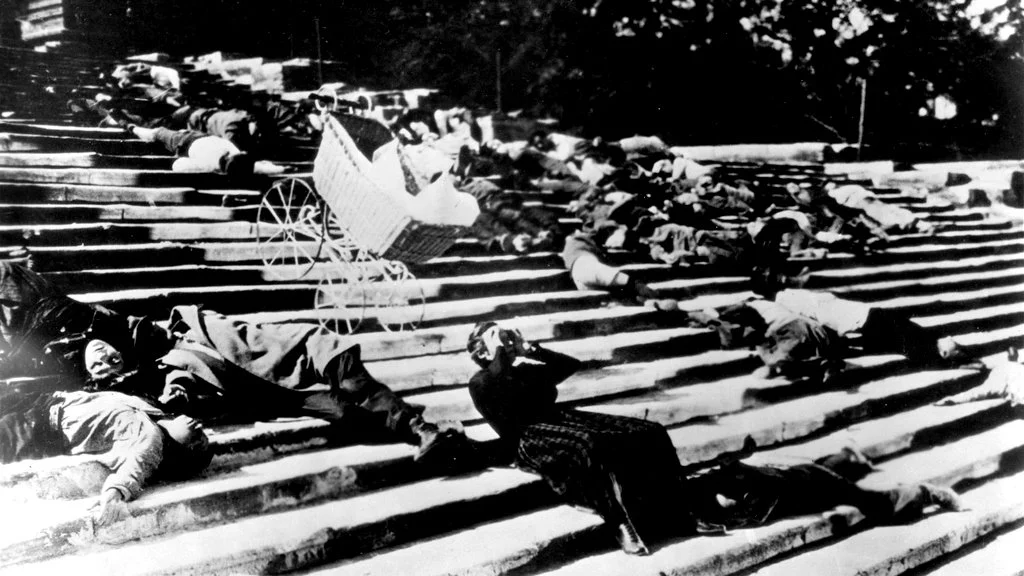
Across the cycle, students begin to understand that montage is not simply about transitions, pace, or cutting quickly. It is about creating emotion, meaning, and sometimes even a political argument through the arrangement of images. They will analyse key moments from Battleship Potemkin (1925), explore the Kuleshov Effect, experiment with creative geography, and build their own sequence using intellectual montage. This combination of theory, close analysis, and practical work makes the cycle especially rich, because students can see the concept, name the concept, and then try it themselves.
By the end of the cycle, students should come away with a much stronger understanding of editing as a meaning-making tool. More importantly, they should begin to feel that the cut is never neutral. It can guide the viewer, shape feeling, build ideas, and completely transform what an image means. Once students really grasp that, they rarely look at editing in the same way again.
Core Components
This cycle focuses on how editing constructs meaning and how cinema in 1920s Soviet Russia became part of a larger political project.
Students explore:
How the Russian Revolution and the creation of a new Soviet state changed the purpose of cinema;
How film became a tool for education, propaganda, and ideological communication;
How material scarcity, including limited film stock and equipment, pushed filmmakers to think more creatively about editing;
How montage creates meaning through juxtaposition rather than through a single shot alone;
How the Kuleshov Effect demonstrates that audiences read emotion and meaning through shot order;
How creative geography allows editors to construct cinematic space from separate locations;
How Eisenstein’s montage methods shape pace, emotion, and political ideas;
How Dziga Vertov uses rhythm, contrast, and documentary energy to present modern Soviet life in a new cinematic form.
Beginner vocabulary includes:
Montage, editing, juxtaposition, Kuleshov Effect, creative geography, metric montage, rhythmic montage, tonal montage, overtonal montage, intellectual montage, agitprop, VGIK, visual metaphor, ideology, cut, pace.
Assessment Focus
Textual Analysis (TA)
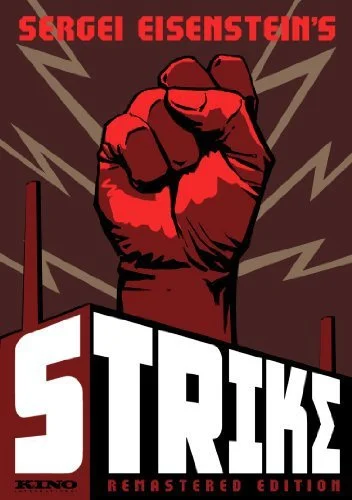
For the FoW in this cycle, I use Strike (1925). My goal here is to push students to see that editing is not just a technical choice, but an artistic device. I ask them to analyse how Eisenstein uses montage, especially juxtaposition and visual metaphor, to communicate political ideas and emotional force. This is also a very useful space to train students in Criterion C, since they need to connect the extract not only to cultural context but also to the film as a whole, something the recent subject reports continue to identify as a weakness for many students. See FoW instructions below.
Film Portfolio (FP)
The montage lab in this cycle gives students a more purposeful bridge into the Film Portfolio. Rather than treating Soviet Montage as film history alone, I use the lab to help students generate practical evidence of planning, experimentation, editing decisions, and creative intention. Because the task asks them to storyboard, shoot, and edit a short sequence built around intellectual montage and creative geography, students begin to see how an editor’s choices can shape meaning, rhythm, and audience response. This is particularly useful for the portfolio because the DP Film course expects students to explore production roles through inquiry, action, and reflection, and to develop clearly articulated intentions rather than simply completing technical exercises. It is also a stronger approach than a basic Kuleshov-only task, which recent subject reports suggest can become too limited if it remains overly simple or isolated.
Comparative Study (CS)
This cycle also gives students strong foundations for the Comparative Study. Eisenstein and Vertov are excellent anchors when students begin thinking about film theory, film movements, and the relationship between style and cultural context. Their work opens the door to later comparisons with filmmakers such as Christopher Nolan, Nicolas Winding Refn, Francis Ford Coppola, or even contemporary music-video aesthetics. Just as importantly, this unit helps students build the habit of connecting formal choices to wider meaning, which is central to success in the CS. The subject reports continue to show that students do better when their comparisons are grounded in real film language rather than broad plot-based commentary.
Collaborative Film Project (CFP) (HL only)
Like every lab in every cycle, this cycle quietly prepares the ground for the Collaborative Film Project. The montage lab helps them refine visual planning, conceptual framing, and editorial control, all of which will matter later when they step into more clearly defined production roles. It also encourages them to think carefully about how meaning is constructed on screen in a production team environment, which is essential if they are going to contribute with purpose inside a collaborative process.
A great example of Intellectual Montage.
Classroom Activities
Class 1: The Power of the Cut
This opening lesson is the lecture anchor for the cycle. It introduces students to the historical and political context of 1920s Soviet Russia and frames montage as both a cinematic breakthrough and a response to a revolutionary society and how limitations can be a great catalyst for creativity. I begin by asking a big question: can editing shape the way people think? From there, the lesson moves through the key figures of Lev Kuleshov, Sergei Eisenstein, and Dziga Vertov, helping students understand that editing in this context was not simply about continuity, but about building emotion, argument, and ideology through the arrangement of images. This fits very well with the DP Film course, which asks students to connect film elements, cultural context, and meaning through inquiry and analysis.
In practical terms, this lesson also introduces the conceptual tools students will need for the rest of the cycle: the Kuleshov Effect, creative geography, and Eisenstein’s five types of montage. I use clips from Battleship Potemkin (1925) and Man with a Movie Camera (1929) to make those ideas visible and discussable. This is also the moment when I announce the Film of the Week for this cycle: Strike (1925) and ask students to begin preparing for a focused editing analysis (see below).
Here is the Handout I publish online and make available to them to download. The handout gives students a concise overview of the political context, the importance of VGIK, the distinction between editing and montage, and the main contributions of Kuleshov, Eisenstein, and Vertov.
Class 2: Montage Lab, Planning and Filming
The second and third classes are all about production. Students work in groups to plan a short montage sequence that communicates an abstract idea through intellectual montage and creative geography. The task is deliberately short and focused: a 30 to 90 second sequence that uses at least two intellectual montage juxtapositions, three creative geography transitions, and at least one absurd creative geography transition in which the cut feels seamless even though the geography is impossible in real life.
In this lab the key element for me is to help students break away from the “technical editing” and experiment with the intellectual montage. They can have a flimsy storyline that will allow them to identify image pairings that can generate that idea, and plan how separate locations can be stitched together into a convincing or deliberately absurd screen space. This is a useful reminder that editing begins in planning, not only in post-production. Students should finish this class with a shot list, and as much footage captured as possible around the school grounds.
Class 3: Montage Lab, Editing and Refinement
This lesson is where the theory clicks into place. Once the students finish shooting, assemble their footage and discover, in a very direct way, that meaning does not sit inside a single image. It emerges through the relationship between images. In the edit, they refine their use of juxtaposition, experiment with rhythm and pace, and test whether their creative geography actually convinces the viewer. The lab also leaves space for peer feedback, which is important because students often only understand whether a montage works once they see how another audience reads it.
Class 4: Screening, Reflection, and FoW Submission
The final lesson of the cycle is where everything comes together. Each group screens its montage, and the class reflects on how editing choices shaped the message. This is the right moment to ask sharper questions: Did the intellectual montage generate a clear idea? Did the creative geography feel believable or deliberately absurd in an effective way? Did the sequence communicate something beyond the literal content of the images? In other words, did the editing actually do the work students intended it to do?
This is also when the FoW on Strike (1925) is due. See all information about it in the Assessments section.
Assessments
Lab Project
The main practical assessment in this cycle is a short montage sequence of 60 to 90 seconds. I use this task to push students toward the core discovery of Soviet Montage: meaning does not simply sit inside the shot. It emerges through the relationship between shots. In this project, students are asked to communicate an idea without dialogue, relying instead on editing, juxtaposition, rhythm, and visual metaphor. Their sequence must demonstrate at least one form of intellectual montage and include examples of creative geography, including one deliberately absurd transition that still feels seamless in the edit.
This is the lab sheet which can also be shared directly with students with rubric.
What I like about this assessment is that it asks students to do more than tell a story. It asks them to construct a conceptual response through editing. In other words, the cut has to do the heavy lifting. The project is introduced in detail in Class 2, when students receive the full lab sheet, the task requirements, and the planning constraints. That structure matters because it echoes the resourceful, concept-driven working methods of the early montage filmmakers themselves. Students work within limitations, but those limitations are productive. They force sharper choices, clearer planning, and stronger editorial intention. The shotlist becomes essential here, not as a decorative extra, but as a working map for meaning.
In-Class Reflection
After screening their sequence, students complete a short in-class reflection. I use this moment to slow the process down and make sure the practical work is translated into film thinking. The reflection asks the whole class to consider what they discovered about the relationship between time, space, and meaning in the edit. Did the montage actually create the intended emotional or intellectual response? Where did the idea become clearer through juxtaposition, and where did it lose force or coherence? This is a brief informal task, but it is an important one, because it helps students move beyond “we made something” toward “we understand what our editing choices did.” That reflective habit sits at the centre of the DP Film course, which repeatedly asks students to document, evaluate, and learn from the process of making film.
I also find that this reflection is useful preparation for later coursework, especially when students need to articulate filmmaker intentions, justify practical decisions, and evaluate the success of their work. The recent subject reports continue to show that students often perform more strongly when they can clearly connect intentions, process, and outcomes, rather than simply describe what they did.
Film of the Week (FoW): Strike (1925)
Like every cycle of my timeline based curriculum, there if a Film of the Week (FoW - you can check here for more details.). For this cycle the FoW is on Strike (1925). Students watch the full film, choose one extract of up to five minutes, and write a 700 to 850 word response explaining how Eisenstein uses editing and montage to create meaning in that passage. The assignment is deliberately structured to keep the TA logic but reduces the scale. Students must include a short context paragraph, two editing-based micro-claims with timecodes, and, for each claim, one link to cultural context and one link to another named sequence elsewhere in the film. That makes the task especially valuable for training Criterion C, which both the 2024 and 2025 subject reports identify as one of the most persistent problem areas, particularly when students fail to connect the extract to the film as a whole.
What I want students to understand in this FoW is that montage in Strike (1925) is never neutral. Editing choices such as rhythm, juxtaposition, and visual metaphor shape viewer perception and communicate political meaning. The slaughterhouse sequence is the obvious anchor and the main one always chosen by the students, but the task encourages them to think more broadly across the film and to see how montage works as a system rather than as an isolated flourish. This is also why I require the writing to stay analytical. Students need to name the editing choice, explain its intended effect, and connect it to the wider cultural and political context of the film. That kind of discipline mirrors exactly what the IB expects in stronger textual analysis work.
The FoW is due in Class 4, and I require students to submit it as a PDF with a working Google Doc link at the top of the first page. That has become an important part of the process, both for checking draft history and for supporting authenticity in a moment when AI use is becoming harder to ignore. The guide and subject reports are both very clear that schools need to support academic honesty and verify the authenticity of student work through consistent supervision and documentation.
Samples Lab
Reflection and Growth
By the end of this cycle, I want students to come away with a much sharper understanding of editing as meaning-making. Too often, students arrive thinking of editing as something that simply joins shots together after filming. Soviet Montage allows us to challenge that idea directly. By working through Kuleshov, Eisenstein, and Vertov, students begin to see that the cut can shape emotion, argument, rhythm, and even ideology. That shift matters because it strengthens both their analytical confidence and their practical decision-making as filmmakers.
This cycle also gives students a valuable opportunity to connect film form to cultural context in a very concrete way. The political and material conditions of post-revolutionary Soviet Russia help them understand that film language does not emerge in a vacuum. It is shaped by history, by institutions, by scarcity, and by the needs of a society at a particular moment. That is an essential IB habit of mind. Students need repeated practice in seeing how style and context speak to one another, and Soviet Montage is one of the clearest places in the course to make that visible.
From an assessment point of view, this cycle is also useful because it helps address one of the most persistent weaknesses in student work: the difficulty of sustaining strong links between a chosen film element, the wider cultural context, and the film as a whole. The recent subject reports continue to show that many students are reasonably secure in identifying technique, but much less secure when asked to develop those connections with balance and precision, especially in Criterion C. The FoW on Strike (1925) is designed to help with exactly that, while the montage lab gives students a practical understanding of the same principle from the inside out.
There is also real growth here on the production side. Even though the cycle is rooted in film history and theory, students are constantly being pushed to think like filmmakers. The lab asks them to plan clearly, edit deliberately, and trust the arrangement of images rather than dialogue to carry meaning.
More than anything, this cycle tends to leave students with a new respect for the cut itself. Once they see that editing can manipulate time, construct space, create metaphor, and guide thought, they rarely return to a simplistic idea of montage. That is the real growth I am looking for. Not just that they can define intellectual montage or spot creative geography, but that they begin to understand editing as one of the central engines of cinema.
Further Reading (IB Focused)
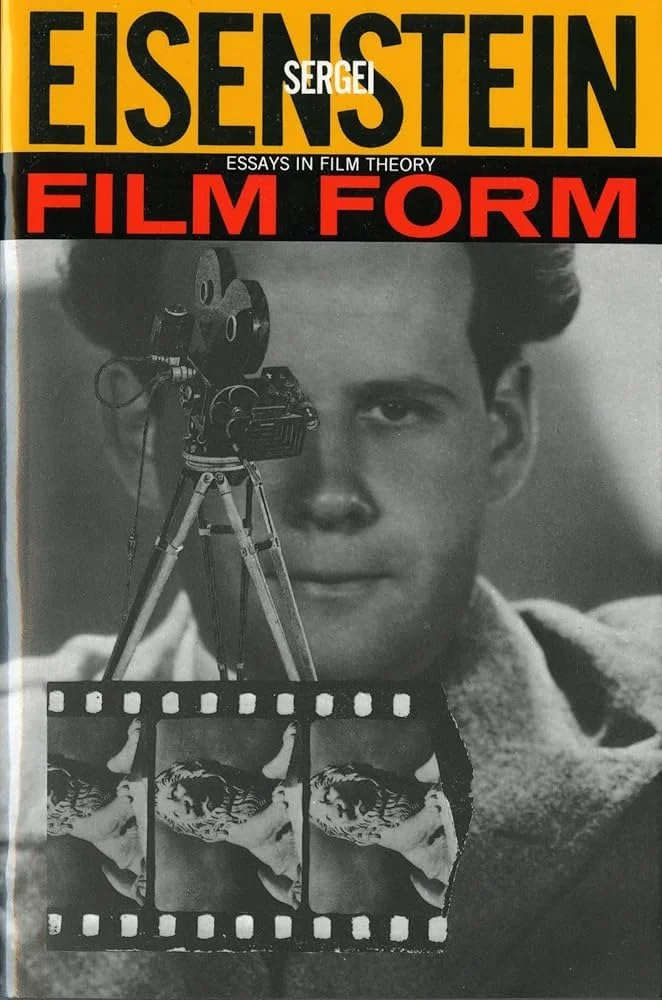
Sergei Eisenstein, Film Form: Essays in Film Theory
Best for:Textual Analysis and Comparative Study.
Why it helps: This is the essential starting point if teachers want students to move beyond “montage = fast cutting” and into Eisenstein’s actual thinking about collision, structure, and meaning. It is especially useful when teaching Strike (1925), Battleship Potemkin (1925), and October (1928).
Dziga Vertov, Kino-Eye: The Writings of Dziga Vertov
Best for: Broadening the cycle beyond Eisenstein and strengthening Comparative Study work.
Why it helps: This is the strongest single book for understanding Vertov in his own words. It helps teachers show that Soviet Montage is not one fixed formula, but a broader debate about film, rhythm, documentary, and perception.
Ian Christie and Richard Taylor (eds.), The Film Factory: Russian and Soviet Cinema in Documents, 1896–1939
Best for:Teacher planning, cultural context, and adding strong source material to lessons.
Why it helps: This is one of the best books for grounding the cycle in actual documents rather than recycled summaries. It is especially useful for showing students how Soviet cinema developed institutionally, politically, and aesthetically.
Richard Taylor, The Politics of the Soviet Cinema 1917–1929
Best for:Cultural context and teacher background reading.
Why it helps: If you want one book that really explains why cinema mattered politically in the early Soviet period, this is probably the one to keep. It is excellent for moving beyond vague claims like “film was propaganda” and into the actual structures, pressures, and uses of cinema in the 1920s.
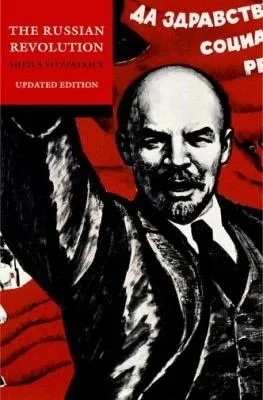
Sheila Fitzpatrick, The Russian Revolution
Best for: Historical grounding and readable teacher preparation.
Why it helps: This is the most practical cultural-context book to keep on the list. It gives teachers a clear, manageable historical frame for the revolution and its consequences without turning the film page into a history seminar.
Teacher's Notes
This cycle balances a theory-rich lecture with a hands-on editing lab, and your role as guide will be crucial. Students may struggle at first to translate abstract concepts like intellectual montage into short-form storytelling. Be sure to support them early on with storyboarding exercises and metaphor brainstorming during Class 2. The accompanying lab handout should clearly outline the project expectations and include a detailed rubric to keep them focused.
During screenings, encourage discussions that go beyond rhythm and technical execution. Ask probing questions like: What idea emerged from this cut? Could this juxtaposition be interpreted another way? Push them to see each shot pairing as a deliberate choice in meaning-making.
Now is also the time to elevate expectations on composition. Make it clear that every frame should be overthought, whether following or breaking the rule of thirds. Emphasise intentional use of repetition, symmetry, negative space and more. Every shot must communicate. Sloppy framing should no longer be acceptable at this stage.
Some groups may lean toward creating loose visual collages. Gently redirect them toward clarity of concept. Each cut should carry purpose, whether to express conflict, irony, contrast or emotion. Offer visual oppositions as inspiration: hands vs. machines, eyes vs. surveillance, nature vs. concrete. Their editing should provoke thought, not just pass time.
Remind them that creative geography does not require elaborate setups. A simple cut from a hallway to a garden can create the illusion of continuous space. At the same time, encourage them to experiment boldly. Let them try jumping out of frame and reappearing in unexpected places, like out of a bush. Play is welcome as long as it serves meaning.
This unit connects beautifully with the IB's emphasis on film as a constructed medium. It strengthens students’ historical foundation, editing fluency and conceptual thinking. They will leave this cycle not only with better technical skills, but with a sharper sense of how editing shapes ideas.